

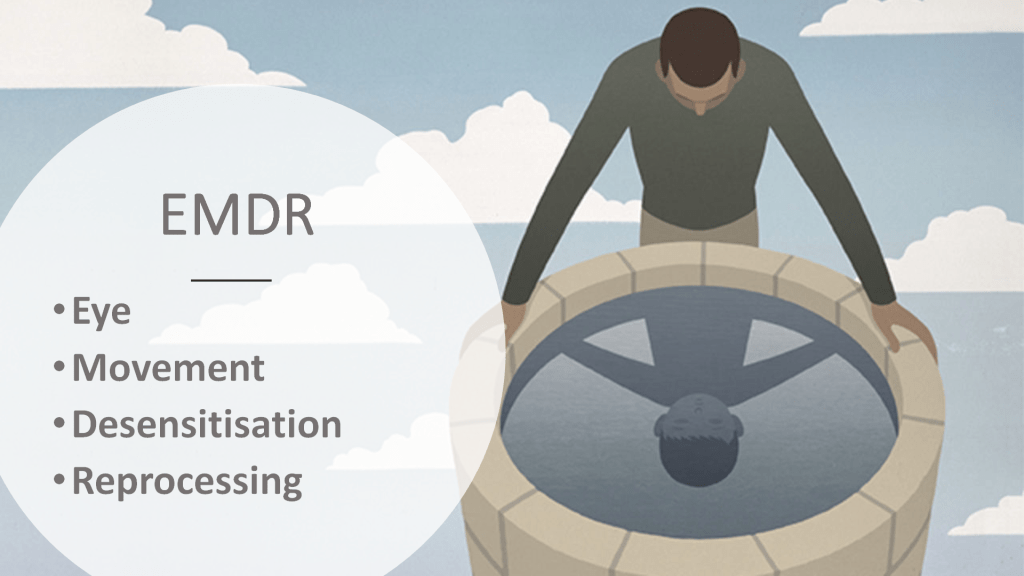
EMDR is an effective treatment for Post-Traumatic Stress Disorder (PTSD) along with a variety of other common mental health difficulties.
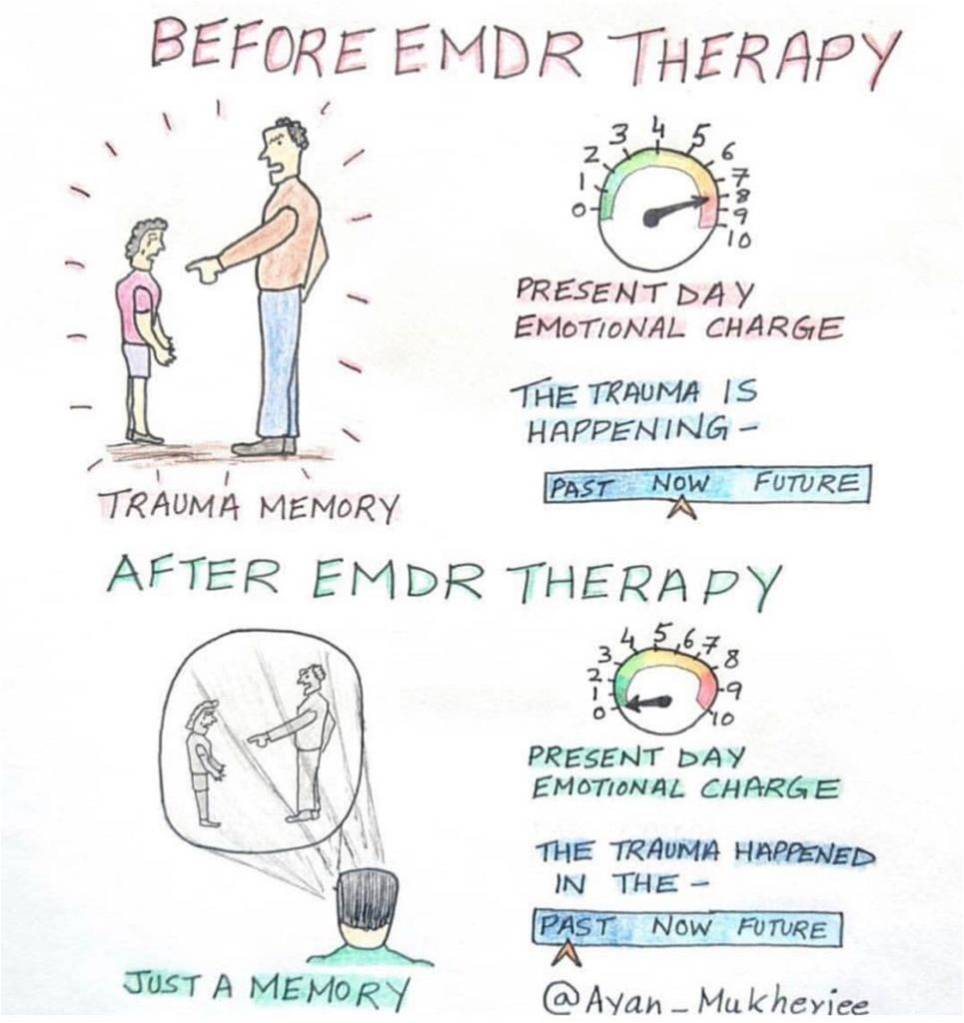
“EMDR works by reducing the intensity of distressing memories so that they don’t interfere with your life so much, allowing you to feel better about yourself and live your life freely.”
This cartoon is taken from an online source and captures the aim of EMDR perfectly!:
So how does it work?
When we are traumatised, the memories of the traumatic events actually get stored in a different part of your brain to regular memories. They end up getting stuck in the danger/fear centre of the brain. This means that when anything reminds you of this event, our brain triggers an overwhelming fear response which makes it feel like the event is happening all over again.
EMDR is based on the principle that the brain has a remarkable ability to heal itself. Consider that you’ve had a falling out with a a friend which at the time made you feel extremely upset whenever you thought about it. Over time, this event seems to matter less and it just doesn’t bother you so much. This is because your brain has the information it needs to resolve this upsetting event (e.g. you start thinking things like “perhaps this isn’t such a big deal after all”.)
In PTSD, the distressing memory gets stuck in time. This is because the memories are so vivid and are accompanied by intense feelings of helplessness, horror, sadness, despair etc. that the person completely avoids thinking about them so the memories are not accessed. This means that the helpful information stored in the brain which can help to resolve the trauma can’t communicate with the trauma memories. So the memories get stuck and go unresolved.
The aim of EMDR is to reduce the vividness and intensity of the trauma memory so that we can access it for long enough in order to resolve/process what happened.
And the eye movements?
This is based on the idea that we process information more quickly when we are engaged in rapid eye movements – consider how your dreams tend to happen when you are in REM (rapid eye movement) sleep. Our dreams are our brain’s way of making sense of all the stuff we have seen, heard, felt or thought about in a day.
Using rapid eye movements in EMDR therapy basically kick-starts information processing. It’s also really hard to hold distressing images in your mind whilst you are moving your eyes so quickly! It’s a bit like rubbing your belly whilst tapping you head in that it overwhelms your brain. As this happens, the vividness and the intensity of the distressing memory starts to reduce and you are able to think about what happened from new perspectives.
What if eye movements don’t work for me?
If rapid eye movements is likely to be difficult for you, there are several other ways we can still do EMDR. One example is using tapping movements as this has the same effect of stimulating either side of your brain.
Is EMDR for you?
Please watch this short video to learn more about how EMDR works and to hear about the personal experiences of those who have had EMDR therapy.
Explaining EMDR to children.
This video from the EMDR Association is great for helping children to understand what EMDR might involve.
 Calmer Insights